
Fulbright New Zealand has been gifted a new Māori name – Te Kura Tūmahana – marking an important milestone in the organisation’s ongoing commitment to honouring te ao Māori and reflecting the true spirit of the Fulbright programme.
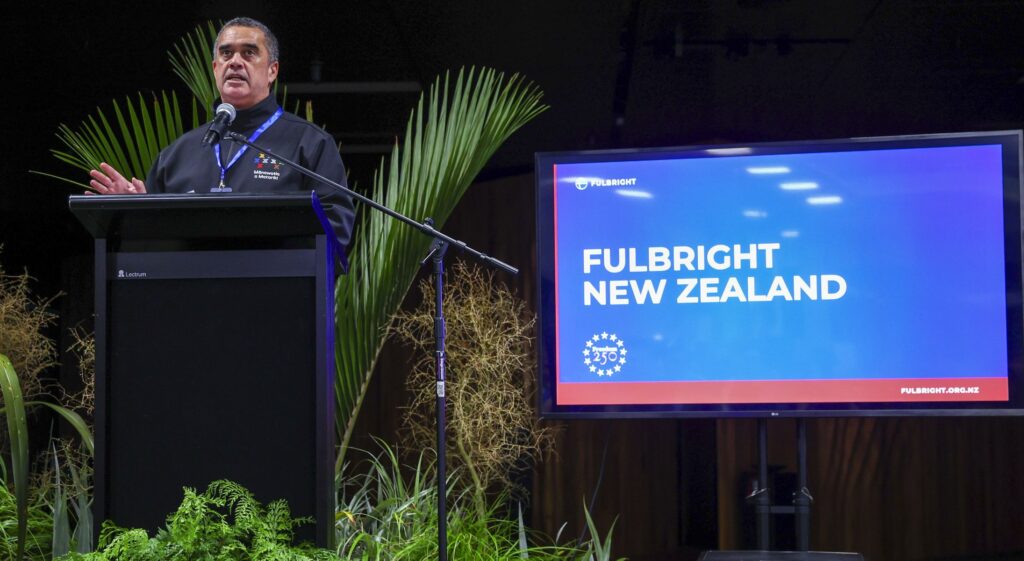
The name was gifted by Fulbright alumnus and Fulbright New Zealand Board member Professor Rangi Mātāmua at the 2026 Fulbright New Zealand Annual Awards Ceremony, where he shared the whakaaro and cultural traditions that inspired its creation.
More than a translation, Te Kura Tūmahana is a name that captures the values at the heart of Fulbright New Zealand: the exchange of knowledge, the building of relationships, reciprocity between peoples, and the sharing of treasured experiences across cultures.
The new name replaces Te Tūāpapa Mātauranga o Aotearoa me Amerika. While the previous name accurately described the organisation as a transliteration of our English name, it did not fully express the deeper purpose and spirit of the Fulbright programme.
The journey to a new Māori name began some time ago but it wasn’t until the refreshment of Fulbright NZ’s strategic plan last year that the process to identify a name could begin. It needed to reflect the programme’s values, align with the organisation’s work, represent the experiences of Fulbright grantees, and be grounded in Māori cultural understanding while remaining inclusive of all people.
The process included exploring the origins and intent of the Fulbright programme, consulting with past Ngā Pae o te Māramatanga Fulbright recipients and seeking guidance from Māori language experts.
In te ao Māori, names are not simply chosen—they are gifted. While many people may contribute ideas, the responsibility for gifting a name rests with an individual.
The name brings together two powerful concepts.
Kura carries multiple interconnected meanings. It refers to knowledge and learning, a place where education is shared, treasured possessions—both tangible and intangible—and peace.
Professor Mātāmua explained, “Kura carries several interconnected meanings: It can mean knowledge and learning. It can mean a place where education is shared. Kura is also a treasure—something tangible and intangible that is shared between people. The word kura also means peace, to spread peace.”
The second part of the name, tūmahana, comes from a traditional Māori practice associated with intertribal gatherings following the harvest season. Communities would travel to visit one another, sharing food, stories, knowledge and hospitality before exchanging treasured gifts as a symbol of respect, reciprocity and enduring relationships.
Professor Mātāmua described these treasured exchanges as the inspiration for the name.
“Traditionally when one tribe travelled to another, they would feast together, share with each other and gift special treasures. Sometimes they were tangible, sometimes not. Those treasures are called tūmahana.”
Together, the two words express the essence of the Fulbright experience.
“Te Kura Tūmahana means the sharing of knowledge and understanding, the exchange of experiences and gifting of cultural treasures, the strengthening of relationships and peace, and the reciprocity of hosting someone and visiting someone.”
Professor Mātāmua said the name also recognises the lasting connections formed through the Fulbright community.
For Fulbright New Zealand, these ideas resonate. Every year, students, scholars, artists and professionals cross the Pacific to learn, teach, research and build lifelong connections. They return not only with new knowledge, but with enduring friendships, fresh perspectives and experiences that enrich communities on both sides of the ocean.