
September 2026 When Dr Mahsa McCauley arrived in North Carolina a year and a half ago on her Fulbright, she expected to spend her time gathering data from beehives. Instead, she found herself becoming a beekeeper.
It was winter in Greensboro, and the bees were largely inactive. Collecting data would not be possible.
“I found myself asking what I was going to do with those months,” she recalls. McCauley decided to learn how to keep bees.
By spring, she had completed her beekeeping training and established three hives at North Carolina Agricultural and Technical State University (A&T). She started collecting data on the sounds, behaviour and environmental conditions of the hive, with the aim of using artificial intelligence to understand bee welfare and predict threats to their survival.
It was a natural evolution of a project that a group of researchers in Auckland had begun several years earlier, and that McCauley was fortunate to join. The “Bee Doctor” project explored whether the hum of a hive could provide clues about the stress level of bees. The work has since grown from New Zealand to the United States, with the original team still collaborating today.
“I was very lucky to be part of that group,” McCauley says. “We are still working on it together as a team.”
“Bees communicate through sound,” she explains. “If we learn to listen to the hum, we can use AI to interpret their stress levels.”
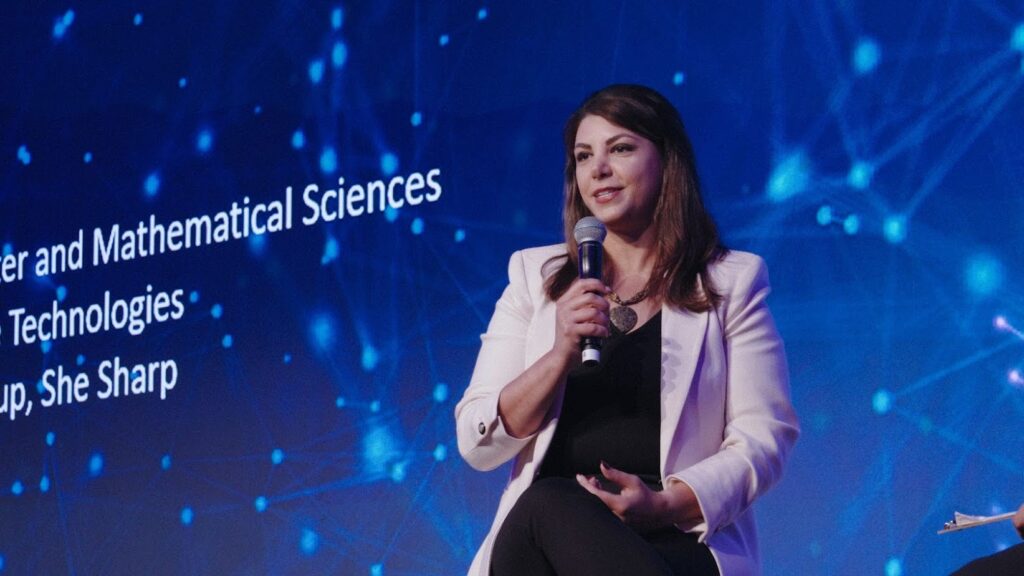
The idea sits at the intersection of several of McCauley’s research interests: artificial intelligence, machine learning, computer vision and cybersecurity. Her Fulbright project, Transforming Bee Welfare with Secure AI-Enhanced Precision Apiculture, brought those strands together at the Farm Security Operations Centre at A&T.
The research goes beyond listening to bees. Computer vision can help identify the queen bee, while sensors can capture information about temperature and other environmental conditions. Combining those datasets with observations of bee behaviour could eventually help researchers predict environmental threats.
One of the questions McCauley and her collaborators are now exploring is whether information from hives could help predict wildfires.
Arriving in Aotearoa
McCauley’s AI interest goes back to her PhD, using Natural Language Processing (NLP) to translate between languages in real time. She moved to Aotearoa New Zealand in 2008 to undertake the PhD, having received a scholarship from Massey University.
Looking back, the subject of her PhD is a reminder of how quickly AI evolves. It is now obsolete.
What’s next for us and AI
McCauley believes the qualities that matter most for the next generation are not necessarily technical ones.
“As the AI revolution unfolds, the less we need to know about the tool itself,” she says. Instead, students need to develop creativity, curiosity and critical thinking. Collaboration, coordination and teamwork will become increasingly important, she believes.
“The future belongs to the team.”
Positively cautious

As Chair of AI Forum New Zealand and Communication and Information Commissioner for the New Zealand National Commission for UNESCO, McCauley is involved in conversations about how AI should be governed and how society can build trust in the technology.
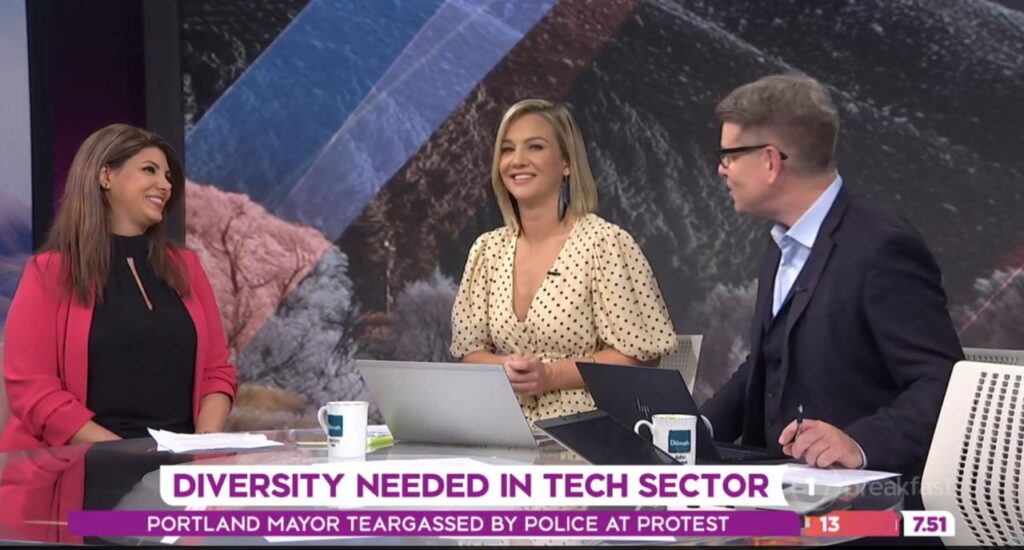
She describes her own approach as “positively cautious”. This phrase emerged when she was asked by RNZ’s Jesse Mulligan to describe her mindset for the future in one word. For McCauley, it captures the need to embrace new ideas while remaining critical about what we are absorbing.
She uses the mindset image of a sponge: soak up new information, squeeze it, filter out what is useful, and adapt.
That ability to adapt will be essential as AI continues to transform education and work.
McCauley is particularly conscious of the gap between the rapid adoption of AI and the level of public trust surrounding it. She believes New Zealanders are anxious about the technology, making ethical guardrails and transparency particularly important.
McCauley notes; “There is also a misconception that artificial intelligence is a single, all-powerful technology. In reality, there are many different forms and applications of AI, each with different capabilities and risks.”
Bee-ing responsible
Responsible AI for McCauley means making sure humans remain at the centre of decisions about how technology is developed and used. It also means ensuring the benefits of AI are accessible to everyone.
That concern for people sits at the heart of her work, whether she is discussing AI governance with policymakers, encouraging students into technology, or standing beside a beehive trying to understand what its inhabitants are telling her.
Life post-Fulbright
After returning to New Zealand, McCauley continued her bee research, establishing a hive at home and working with a PhD student to develop the research further. She is also exploring funding for a set of hives at AUT’s North Shore campus.
Her Fulbright experience is part of a longer journey rather than a completed project.
Today McCauley is an Associate Professor and Head of Computer and Information Sciences at Auckland University of Technology (AUT), she works across research, education, industry engagement and academic strategy. She has authored more than 100 publications and supervised more than 70 research projects across AI, machine learning, cybersecurity and natural language processing.