

Fulbright reveals 2026 Distinguished Awards in Teaching recipients
Two teachers from the Wellington region have secured the opportunity to study in the United States as part of the Fulbright Distinguished Awards in Teaching programme. Rachael Kneepkens and Mary Bluck will head to the US in August to exchange expertise and carry out their chosen research at either the
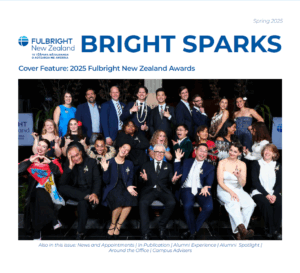
The new issue of Bright Sparks is here!
We’re delighted to share the latest issue of Bright Sparks (Spring 2025) — our biannual roundup of Fulbright stories, connections, and achievements. This issue celebrates our 2025 award recipients, alumni making an impact around the world, and the growing network of Campus Advisers who continue to inspire the next generation

2025 Fulbright-Ngā Pae o te Māramatanga Grantees
Fulbright New Zealand and Ngā Pae o te Māramatanga, New Zealand’s Māori Centre of Research Excellence, are delighted to announce the recipients of the 2025 recipient of the Fulbright-Ngā Pae o te Māramatanga Awards. Kelly will research how native Hawaiian practitioners and traditional healers rejuvenate customary native Hawaiian maternity practices

Simone Kaho awarded 2025 Fulbright-Creative New Zealand Pacific Writer’s Residency in Hawai’i
Fulbright New Zealand and Creative New Zealand are delighted to announce Simone Kaho is the recipient of the 2025 Pacific Writer’s Residency. This annual award is for an established New Zealand writer of Pacific heritage to carry out work on a creative writing project exploring Pacific identity, culture or history
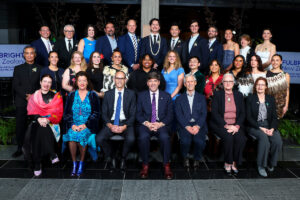
Announcing the 2025 Fulbright New Zealand Cohort
Fulbright New Zealand is delighted to announce the recipients of the 2025 New Zealand Graduate and Scholar Awards.The grantees in each category are as follows. Fulbright NZ Scholar Awards Fulbright Scholar Awards are for New Zealand academics, artists or professionals to lecture and/or conduct research at US institutions. The following
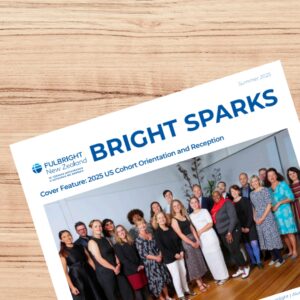
Bright Sparks Summer 2025
The latest edition of Bright Sparks has arrived! Brimming with news, features, photos and more, it’s the best way to keep up to date with all things Fulbright NZ. In this issue: All that and much more! Click here for the digital copy, or get in touch if you would

Announcing the 2025 Fulbright US Cohort
Fulbright New Zealand is thrilled to announce the 2025 cohort of US Scholars, Graduates, and Specialists. Fulbright New Zealand Executive Director, Penelope Borland, says the latest group of US grantees travelling to Aotearoa is testament to a deeply held, shared commitment to the betterment of our world. “Year after year

Announcing the 2025 Ian Axford Fellows in Public Policy
Fulbright New Zealand is pleased to announce the recipients of the 2025 Ian Axford Fellowships in Public Policy. These fellowships are for outstanding mid-career US professionals to research and gain first-hand experience of public policy at a New Zealand government organisation. Ian Axford Board Chair Roy Ferguson says the quality

David Fane awarded 2024 Fulbright-Creative New Zealand Pacific Writer’s Residency
Fulbright New Zealand and Creative New Zealand are pleased to announce that David Fane is the recipient of the 2024 Pacific Writer’s Residency. This award is for an established New Zealand writer of Pacific heritage to carry out work on a creative writing project exploring Pacific identity, culture or history at

Fulbright-Ngā Pae o te Māramatanga 2024 Graduate Award Announcement
Finley Ngarangi Johnson to travel to Hawai’i, Duluth, and Baltimore as a Visiting Student Researcher Fulbright New Zealand and Ngā Pae o te Māramatanga, New Zealand’s Māori Centre of Research Excellence, are pleased to announce that Finley Ngarangi Johnson (Rongomaiwahine, Ngāti Kahungunu) is the 2024 recipient of the Fulbright-Ngā Pae

Stage direction and hate speech detection feature in diverse cohort of 2024 Fulbright NZ Graduates
2024 Fulbright New Zealand Graduate Awards announced Fulbright New Zealand has today announced the 15 recipients of this year’s New Zealand Graduate Awards. These prestigious awards enable New Zealand graduate students to undertake postgraduate study or research at US institutions. Subjects covered by this year’s cohort form a particularly diverse

Fulbright Outreach 2024
What would you do with a Fulbright? Have you always wanted to study or carry out research overseas? A Fulbright Award could take you to a leading institution in the United States. We have a range of awards for graduates, scholars, creatives, professionals and more. Want to know more? Stand